Technology
What we use, device by device
The Smalț clinics work with 4 main devices: a CBCT scanner, an intraoral scanner, an operating microscope and a ceramic milling unit. Every clinic has a CBCT scanner, and the milling unit is in the ceramics lab in Bucharest, which works for all three clinics. Alongside them come digital X-rays, rubber dam isolation and a 5-step sterilisation flow. This page explains each one in plain words, with the treatments it is used for.
01 · CBCT scanner
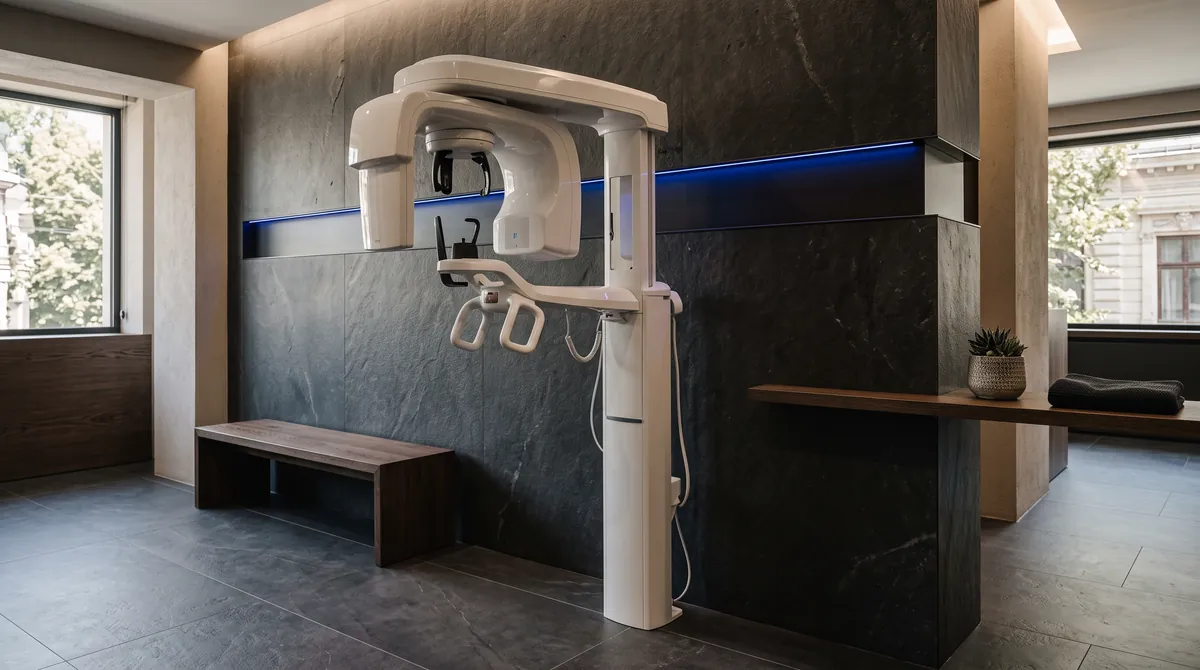
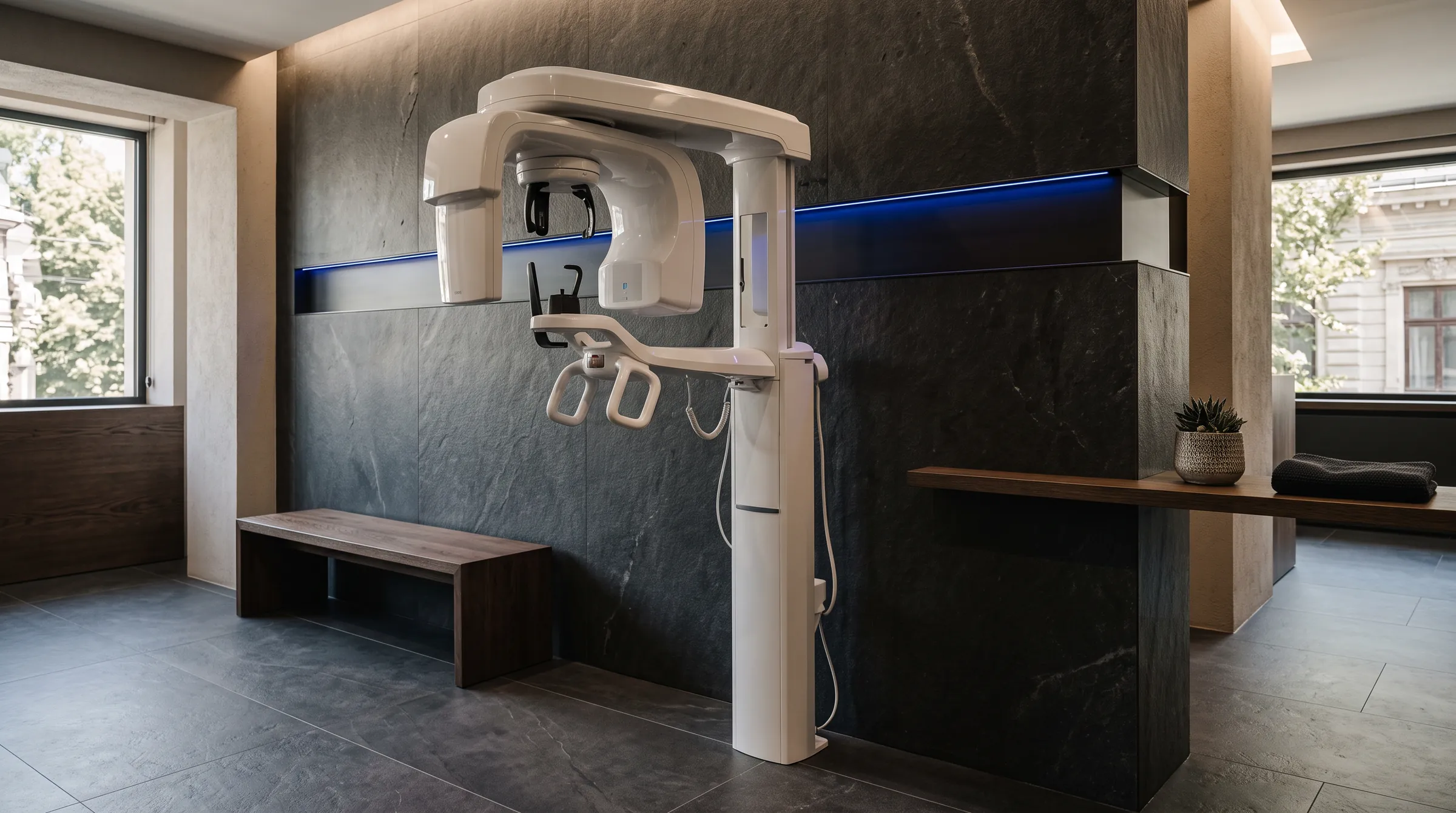
The CBCT scanner (cone beam computed tomography) takes a 3D image of the jaws in under a minute. It shows the height and width of the bone, the roots, the canals and the path of the nerve. Implants, complex root canal treatments and wisdom tooth removals are planned on it. The scan is part of the £395 diagnosis, and patients from abroad can take the files home.
02 · Intraoral scanner
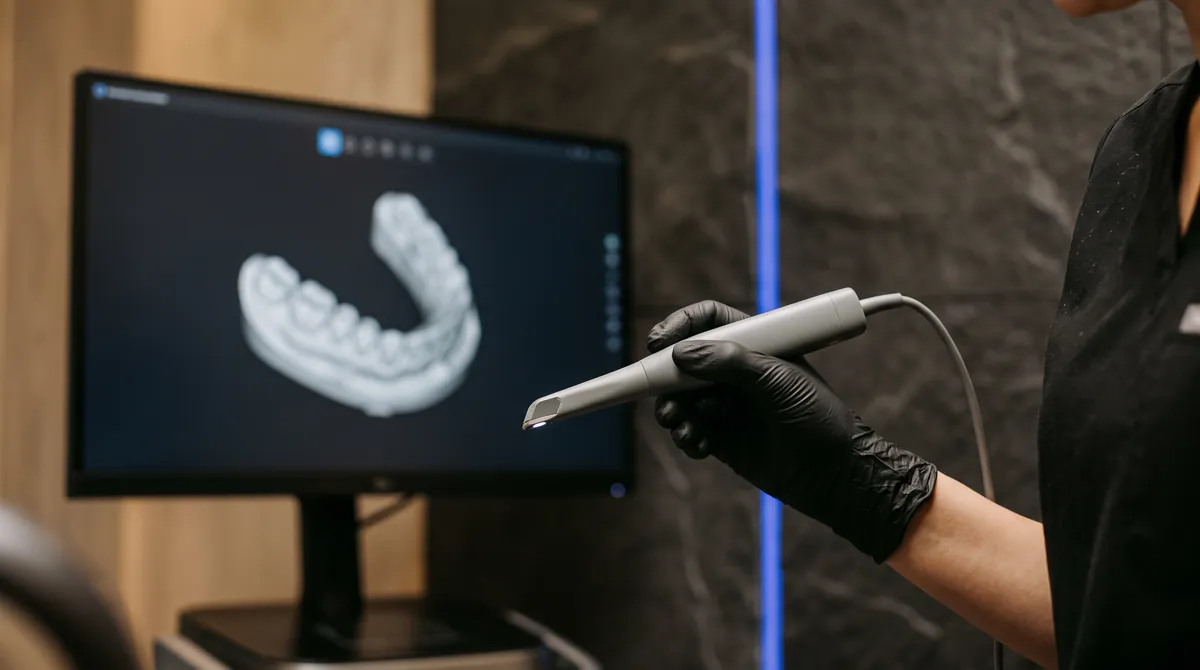
The intraoral scanner is a small camera, about the size of a toothbrush, that photographs the teeth from every angle and builds a 3D model from the images. It replaces the paste impression, the one that can trigger a gag reflex. A scan takes 2 to 5 minutes per arch and is used for crowns, veneers, clear aligners and implants.
03 · Operating microscope
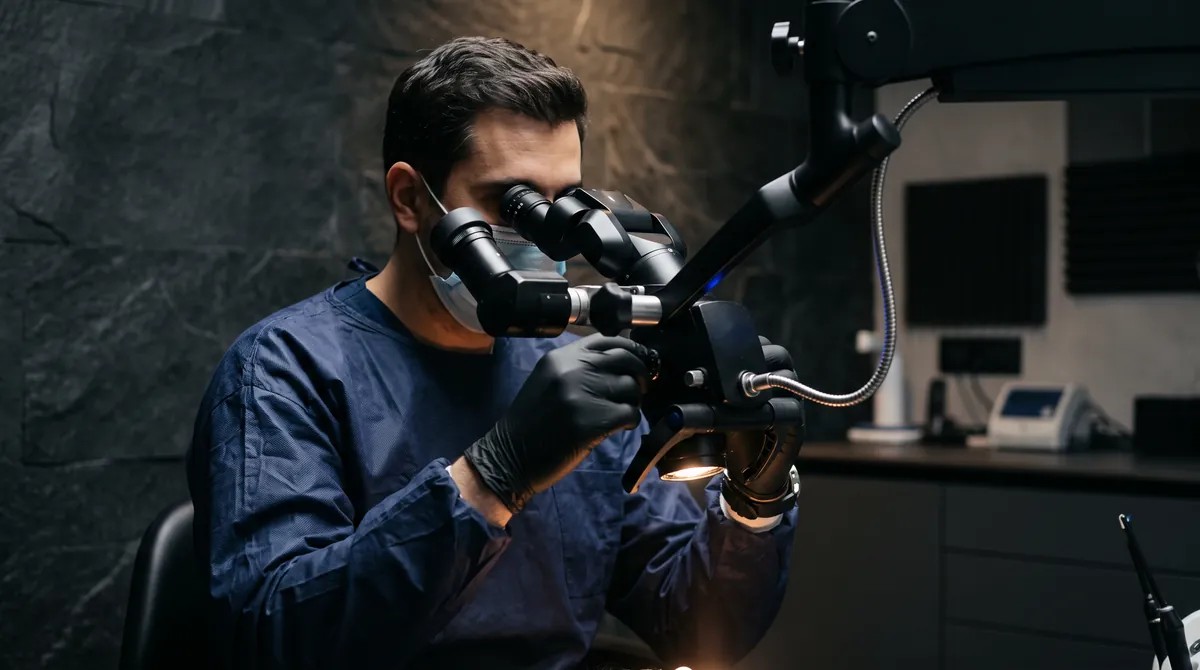
The operating microscope magnifies the working area up to 25 times and lights it directly. In root canal treatment it shows thin canals that are hard to see with the naked eye. For crowns and veneers, the dentist uses it to check the margin between the restoration and the tooth, where plaque collects if the margin is not closed.
04 · In-clinic ceramic milling
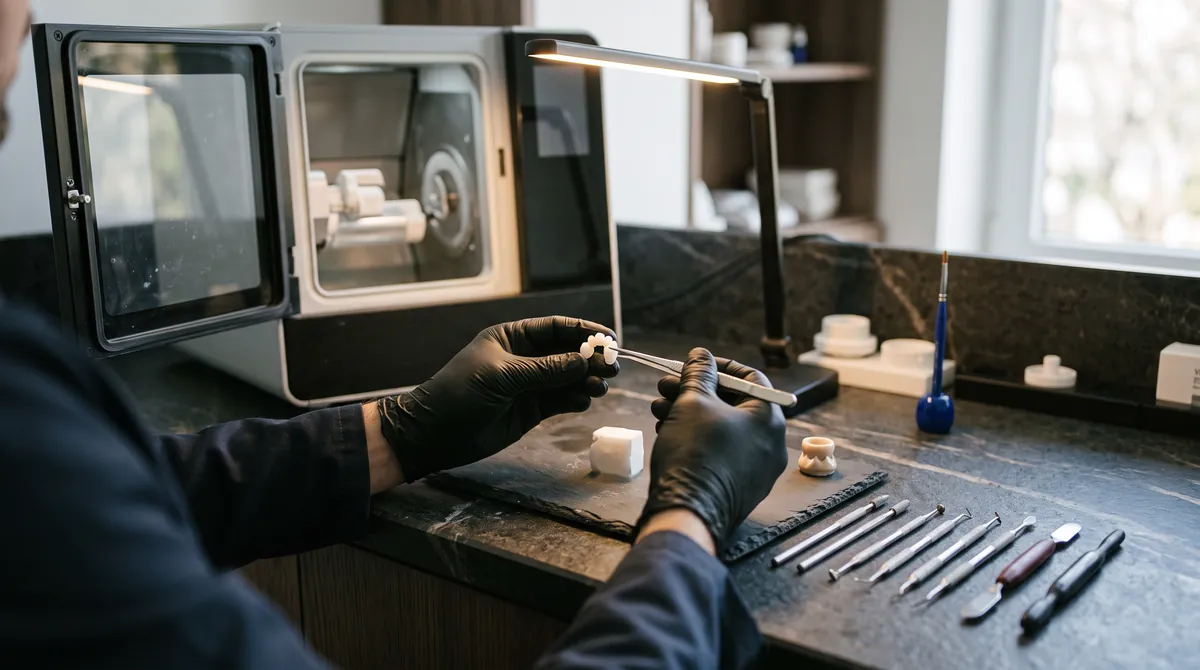
The milling unit, in the Smalț ceramics lab in Bucharest, cuts a crown or veneer from a block of ceramic, based on the intraoral scan. At the Bucharest clinic, when the case allows, a crown is scanned, milled and cemented on the same day, in a visit of 2 to 3 hours. In London and Dubai, the scan is sent to the Bucharest lab and the crown is fitted at a second visit. Front crowns that need layered ceramic for the colour are made over 2 visits in every clinic.
05 · Digital X-ray
A digital periapical X-ray shows 1 to 3 teeth in detail, on a small sensor placed in the mouth, and the image appears on screen within seconds. It uses a lower dose than film X-rays. It is taken at check-ups, during root canal treatment and in emergencies, and the files can be emailed to your dentist at home.
06 · Rubber dam isolation
A rubber dam is a thin rubber sheet placed around the tooth being treated, keeping saliva away. At Smalț it is used for fillings, root canal treatment and bonding veneers. Composite and adhesive cement bond better to a dry tooth, and small instruments cannot reach the throat.
07 · Sterilisation flow
- 01
Cleaning
Instruments are washed in an ultrasonic bath and a washer-disinfector, right after use.
- 02
Inspection
Each instrument is checked visually and dried before packing.
- 03
Packing
Instruments go into sealed pouches, labelled with the date and the sterilisation cycle.
- 04
Sterilisation
The pouches go into a steam autoclave at 134 degrees Celsius, with a control test at every cycle.
- 05
Opening
The pouch is opened in front of you, at the start of the session.
Frequently asked questions
What is a CBCT scanner?
A CBCT scanner takes a 3D image of the jaws in under a minute, using a cone-shaped X-ray beam. It shows the bone, roots, canals and nerves. The dose is much lower than a standard medical CT scan.
Does an intraoral scan replace the paste impression?
Yes, for crowns, veneers, clear aligners and work on implants. A scan takes 2 to 5 minutes per arch and does not trigger the gag reflex that paste impressions can.
Can a crown be made in one day?
Only at the Bucharest clinic, where the ceramics lab is: when the case allows, a crown is scanned, milled and cemented there in a visit of 2 to 3 hours. In London and Dubai, crowns are made in the Bucharest lab and fitted at a second visit.
How are instruments sterilised?
Instruments are cleaned ultrasonically and in a washer-disinfector, packed in sealed pouches and sterilised in a steam autoclave at 134 degrees Celsius. The pouch is opened in front of the patient.